
So you need to raise funding for your business?
 You have your brilliant business idea. You’ve done the market research and you’re convinced there’s a market for your product. You’ve still got the day job so are working late into the night and all weekend getting your company off the ground. Your family has given you what they can to help out. But you need more money to create your MVP (minimum viable product) to move onto the next stage of your business.
Or maybe your MVP is out there and doing well but you need bigger premises or more staff? You’ve got an idea for a new product range but you need money to research and develop it.
In short you need to raise funding for your business.
What is equity investment?
On a very basic level equity investment is selling a % of your company in return for an injection of cash. Let’s say you receive £30,000 in return for a 20% share in your company. Going forward your investor will receive a 20% share of your profits. It can get a lot more complicated than this (priced equity rounds, convertible securities, etc etc) but for the sake of our article we’ll stick with this simple explanation.
Equity investment v bank loans
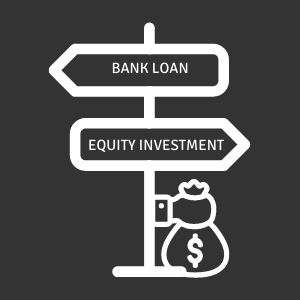 If you need more money and you’re convinced your business will be a success then why would you not take out a bank loan? In many cases a bank loan may be just what you need. Eg. kitting out a new restaurant. But if your business is manufacturing a new product, or is in the service industry then you’re less likely to get a loan. Why? Because you won’t have any collateral for the bank to reclaim if you default. And if your business is just starting out you may not be in a position to finance the repayments.
This is the beauty of equity investment, you are given money that you don’t have to pay back. Well kind of…as mentioned before you are giving your investor a share in your company profits. So if your company is very successful the initial investment of £30k could end up costing you a lot more than a bank loan. But this is also the reason why investors will invest in your business. It’s a lot more risky than putting their money into a savings vehicle but when it works the rewards can be huge.
Who will invest in my business?
You’re happy that equity investment is the right move for you but who are the people or companies that will invest in your business? Let’s have a look at the main types here:
- Business angels or solo investors
 These are individuals, usually successful business people, who are using their own funds to invest in businesses they like the look of. Ultimately they will be doing it to earn money but many are also doing it to give something back to the business community. Often they will act as mentors for a business but have a limited say in how the business is actually run. As they are individuals their investments are usually in the £10,000s but can run to £100,000+ in some instances. Business angels are typically involved in the early stages of a business and often assist with seed funding (ie getting the business off the ground before you’ve made any money) but can also work with you to scale a business.
- Angel groups or syndicates
Angel groups are pretty much what they sound like – groups or networks of individual angel investors that come together to make bigger investments. Syndicates are similar but it is a more formalised structure and there are differences on the legal and accounting sides. Again they will be involved fairly early on in the company’s lifecycle.
- Venture capital or private equity
Venture capitalists manage a pooled fund of investors’ money whose investments are generally counted in the millions rather than the thousands. Although they do invest in startups they get involved at a slightly later stage than business angels. As they are guardians for other people’s money they tend to look for companies that have a proven record and the potential to expand if given enough investment. They will be a lot more involved in the running of the business than a business angel and will often take a seat on the board of directors. They make their money by developing the business and then selling on or floating on the public stock markets.
Private equity is similar. However, they tend to work more to improve faltering mature businesses and they usually take a majority share in the business.
- Crowdfunding
 You’ve probably heard of kickstarter, a well known crowdfunding site. Crowdfunding is when you are asking the “crowd” to fund your project. You can do this in various ways – ask for donations, allowing first access to a new product or discounts in return for a donation, promising a % return on investment or a share in the equity of the business. The benefits of it are that it’s fairly low cost and low risk. Also, it works as a piece of market research in its own right – if you’re getting a good response on the crowdfunding site then chances are there is a market for your product. However it could take quite a while to get the required amounts of funding, if you get them at all. The average success rate for crowdfunding campaigns is only around 22%.
So the kind of person or organisation that will invest in your business depends on where you are in the lifecycle of your business and the amount of investment you’re looking for. If you’ve exhausted your personal contacts but are certainly not needing an investment of millions then looking for a business angel is a great place to start.
At Frejz Invest we are experts at helping you raise capital to startup or scale up your business. For more information on how we can help please get in touch.