
By Elaine Catton
Photo credit: Daimler
As 2020 dawned, European carmakers were facing arguably one of the biggest challenges in the industry’s modern-day history. The roll-out of new CO2 emissions legislation in 2020 and 2021 was forcing them to ramp up sales of low and zero-emissions vehicles or face heavy fines. This issue was two-pronged, not only were they scrambling to bring to market varying pipelines of battery-electric and plug-in-hybrid vehicles, they also had to persuade wary consumers to buy them.
Less than three months into the year, and carmakers all over the world were reflecting nostalgically on those oh-so-mundane problems as they listened to the deafening silence of their manufacturing facilities shut down by the global coronavirus pandemic.
At time of writing, a cautious restart is rippling through the automotive sector and its supply chains as they attempt to implement and adjust to markedly different working practices. However, the uncertainties facing the industry extend beyond “merely” the global economic carnage wreaked by the virus. And those uncertainties come with possible upsides and potentially crippling downsides.
With “social distancing” part of the modern lexicon for the foreseeable future, people are being warned to avoid public transport and use their car where possible. As a consequence, consumers may find themselves even more dependent upon the individual metal box on wheels that has been so maligned in recent years for polluting the planet.
Photo credit: Daimler
There can be no doubt that marketing strategists and advertising agencies around the globe are working furiously in their home offices to come up with post-corona communication plans that will mine this unexpected new vein of public preoccupation with an invisible viral foe.
Meanwhile, operators of public transport services are wringing their hands in despair at the prospect of the post-corona world. Even once social-distancing measures are relaxed, many users of public transport could still be reluctant to expose themselves to the viral soup of packed commuter trains and buses. Furthermore, having been forced to put it to the test, working from home may well become the new normal, putting even more downward pressure on rider numbers.
By the same measure, new shared mobility concepts could also face a downturn in demand.
In recent years, new models such as car sharing, ride hailing, multi-modal transport integration and micro-mobility (scooters and e-bikes) have been forcing conventional car makers to reappraise their structures and rebrand themselves as “providers of mobility solutions”. Driving this is the threat posed to their brands by the commoditisation of mobility. If the privately owned car loses its desirability on a practical or, more importantly, emotional level, it has the potential to wipe billions off the value of some of the world’s biggest badges. If the mobility service becomes king in the consumer mindset rather than the vehicle itself, car brands could be sidelined as mere subcontract manufacturers supplying vehicle hardware to mobility brands.
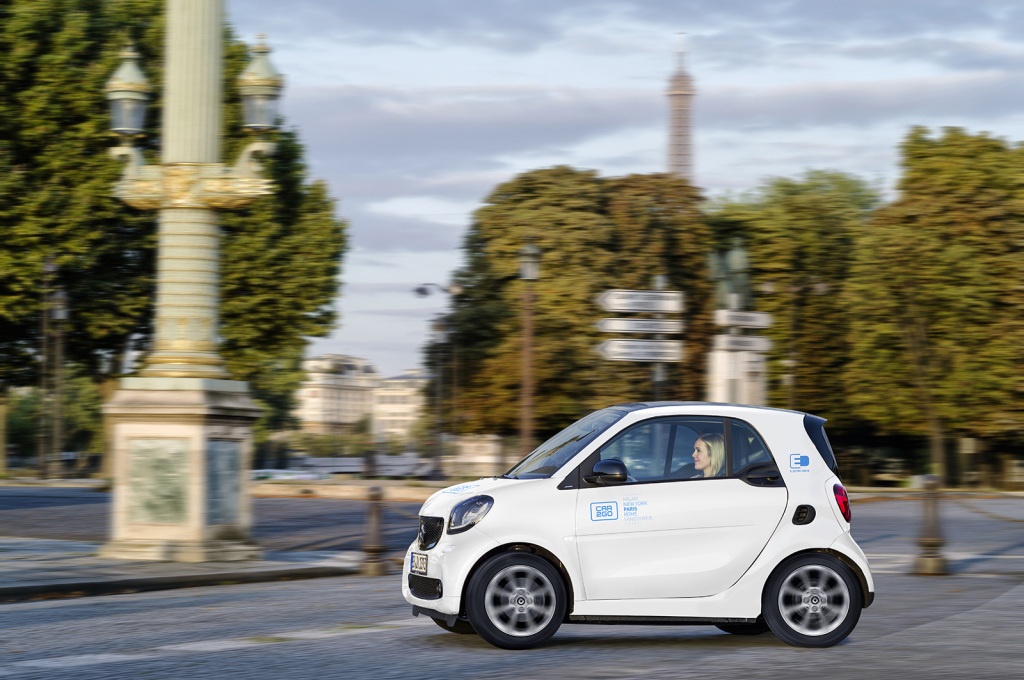
Photo Credit: Daimler
Faced with this threat, carmakers have been looking at more innovative ways of doing business, many of which involve changes to the relationship with the end consumer. These include a variety of sharing, on-demand and subscription models that don’t limit the consumer to “owning” one particular car, instead giving them the flexibility to use a variety of different models to suit their needs. Clearly, such approaches would present opportunities and threats to the traditional business models operated by the likes of dealerships and car hire companies as well as the independent aftermarket sector and insurance companies.
However, the coronavirus pandemic may cause a shift in the trajectory of mobility developments that could lead to a retrenchment among the traditional incumbents of the automotive sector seeking to capitalise on consumer fears – at least in certain mature markets such as the US and Europe, both of which have long-standing cultures of private car ownership and the infrastructures to match.
But there’s a flipside to consumer sentiment that is altogether less favourable for the auto sector. In recent weeks, several European carmakers have issued pleas for government-funded incentive schemes to kickstart the industry, along the lines of the scrappage schemes offered in the aftermath of the 2008 financial crash. However, the response from governments has been decidedly cool. Already digging deep into their war chests to support public health systems and provide families and businesses with an array of financial assistance measures, there is firm resistance to propping up an industry still besmirched by the diesel emissions scandal. Added to that, as lockdowns around the world offer a brief glimpse of cities unencumbered by air pollution, many local and regional governments are using the opportunity to introduce sweeping new measures to reduce car traffic. Meanwhile, consumers are taking to their bicycles in droves. Whether that lasts beyond the summer months, however, is another matter.
So, will EVs prove a saving grace for the auto industry? A lot of that will depend on the broader economic picture, of course – the length and depth of the ensuing recession. Aside from hold-ups in carmakers’ product development and launch plans, there is also the matter of charging infrastructure, which is critical to consumer acceptance. A lot of the work being done in the UK to develop charging infrastructure is dependent upon a mixture of public and private investment, something that could be seriously compromised by the almighty hit to the public purse caused by covid-19.
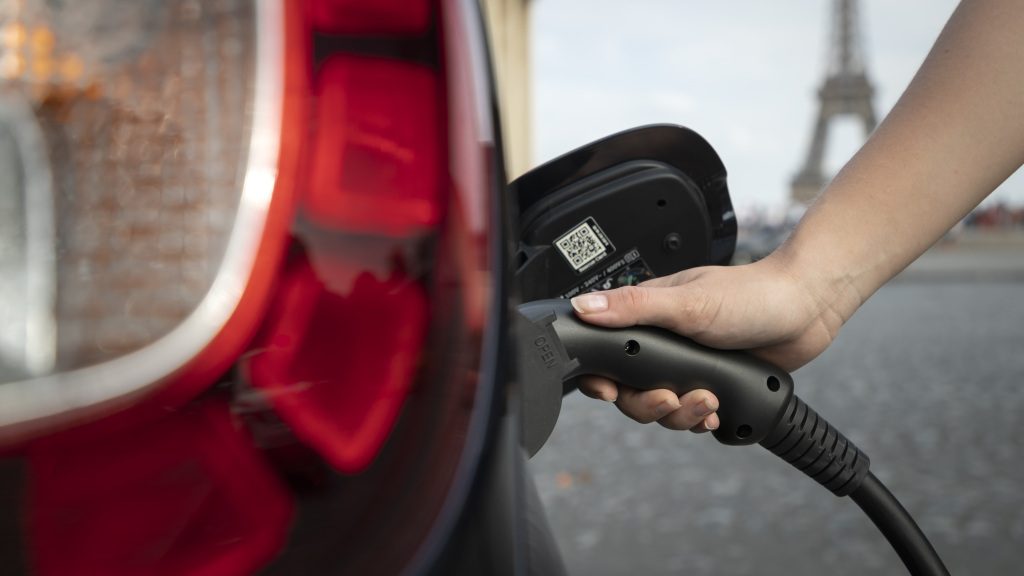
Photo credit: Daimler
This notwithstanding, the emerging mindset in business and government pre-corona was viewing sustainability and circular economies as a business opportunity rather than a threat. And there is some evidence that the aforementioned drops in air pollution during lockdown are making consumers think more favourably about EVs. So, while car sales as a whole will certainly suffer within the broader context of economic recession, the current circumstances could ultimately speed the uptake of EVs.
Nevertheless, further down the line, carmakers and other mobility businesses will still have a circle to square. Urban congestion will not be alleviated by simply replacing conventional vehicles with EVs. And aside from the “corona effect” there remains substantial environmental, ethical, resource and economic concerns surrounding individual vehicle ownership on a global level, especially in emerging economies with burgeoning urbanisation.
In developed economies such as the UK, however, the human instinct of self-preservation could well keep us committed to our personal, antiviral havens of individual mobility for a while longer.
Recent Comments